If you don’t have a religious identity, you’ve probably already done the mental math before calling a new therapist: Will they judge me for this? Will I spend the first few sessions defending my non-belief? Will my lack of faith get quietly framed as part of the problem?
Those are reasonable concerns. Therapy is full of language and assumptions that presuppose some relationship with religion or spirituality — and for people who genuinely don’t have one, that can turn a session into an exhausting exercise in translation before the real work even begins.
That’s not what happens here.
Where I’m coming from
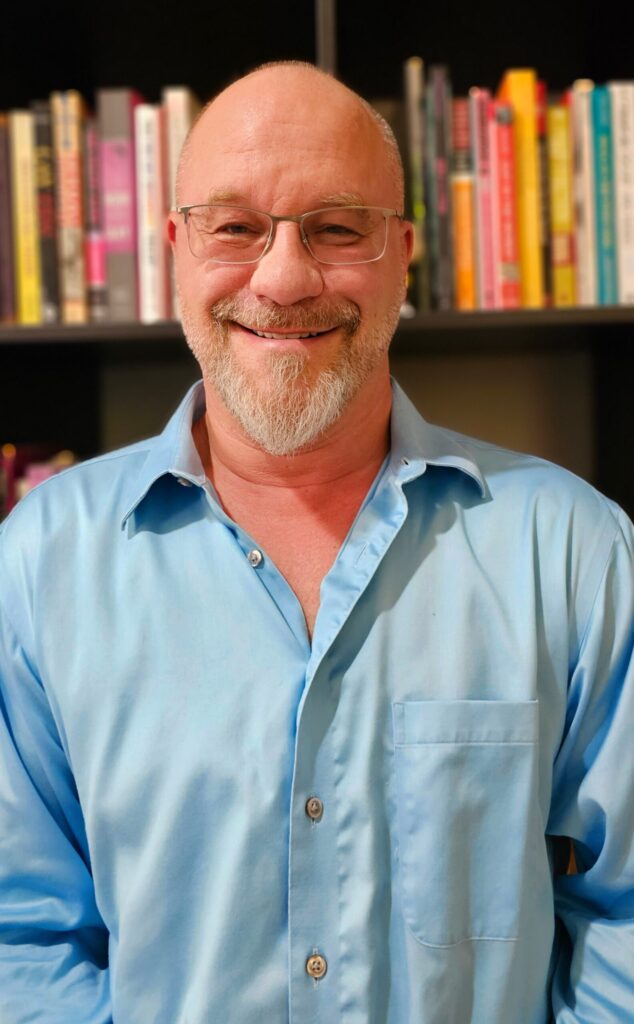
I’m a licensed psychologist with over 20 years of clinical experience, and I rejected religion for myself in childhood. I’m not a therapist who tolerates non-belief while privately hoping you’ll find your way back to something. I understand the secular worldview from the inside — the way meaning gets constructed without a metaphysical framework, the particular texture of navigating grief, mortality, or purpose without religious consolation, and the specific frustration of living in a culture that often treats non-belief as an absence rather than a position.
You won’t need to orient me. We can start from genuine shared context and get directly to whatever brought you here.
What people come in for
Most of the work I do is the work that brings anyone to therapy. Anxiety. Depression. Life transitions that have stopped making sense. Relationship challenges. Grief. Self-esteem. The quieter questions about direction and meaning that don’t always have a clean diagnostic label.
What’s distinctive isn’t the work itself. It’s the population I do that work with — and the way your secular orientation can simply be context for the work rather than something you have to translate, defend, or quietly suspect is being pathologized.
Who I work with
You might be a good fit if any of these resonate:
- You’re navigating anxiety, depression, grief, a life transition, or a relationship challenge — and want a therapist whose framework matches yours
- You’ve felt dismissed, pathologized, or subtly judged by previous therapists because of your beliefs, or lack of them
- You want a therapist who is already comfortable working without any religious framework, so you can focus on what actually brought you in
- You’re looking for meaning, purpose, or direction and want to build that within a secular framework rather than being pointed toward one you’ve already considered and rejected
What sessions are like
My approach draws on cognitive-behavioral, humanistic, existential, and psychodynamic traditions. Sessions are conversational, honest, and free of judgment. I’ll engage directly with what you bring, which means you can expect to be challenged as well as supported. The most meaningful change tends to happen when people feel both genuinely safe and genuinely stretched.
Sessions are grounded entirely in your worldview, not mine. I don’t incorporate religious frameworks, suggest spiritual practices, or treat your secular orientation as something to be examined or worked through. We work with the values, meanings, and frameworks you actually have — and build from there.
I offer in-person sessions in Houston and telehealth throughout Texas.
A few questions people ask
Will my non-belief be judged?
No. My aim is to understand your worldview and work within it — not to question it or treat it as a problem to be solved.
Do you bring any religious perspective into the work?
Not at all. Sessions are conducted entirely within your belief system. Most of my secular clients come in for general clinical concerns and never spend a session on existential or worldview questions; others want to think directly about meaning and mortality from a secular frame. Both are completely valid.
Are you available outside Houston?
Yes. I offer telehealth sessions throughout Texas.
Getting started
If any of this resonates, reach out. We’ll have a straightforward conversation about what you’re working on and whether we’d be a good fit — no pressure, no commitment.

 Call or text: 832-215-3668
 Email: